The fire crater in Darvaza, Turkmenistan, commonly referred to the “Door to Hell,” has been burning for over 50 years and has a significant impact on the surrounding environment.
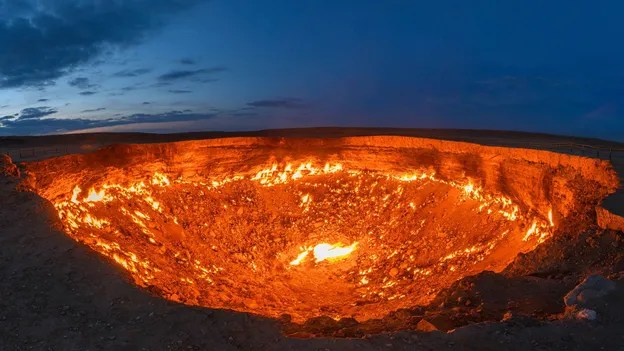
Located in the middle of the Karakum Desert, the fire crater was formed in 1971 when a drilling rig accidentally punctured a large underground deposit of natural gas. In an attempt to prevent the release of toxic gases, Soviet geologists set the gas on fire, hoping it would burn out in a few days. However, the fire has continued to burn to this day.
The intense heat and fumes from the fire have a damaging effect on the local flora and fauna. The area directly surrounding the crater has been largely deforested and the vegetation that once flourished in the region has been replaced by a barren, lifeless landscape. The heat from the fire has also made it difficult for wildlife to survive in the vicinity.
In addition to the direct environmental effects, the fire crater also has an impact on the air quality in the surrounding area. The fumes from the burning gas contain a number of harmful pollutants, including carbon monoxide and methane, which can have negative effects on human health. The emissions from the fire have also contributed to air pollution in the region, which has led to a decrease in air quality.
The impact of the fire crater on the local water supply has also been a concern. The release of toxic gases and chemicals into the air can contaminate nearby water sources, potentially affecting the health of humans, plants and animals as well that rely on the water.
Despite the negative effects of the fire crater, it has also some positive impacts on the local economy. The attraction has brought tourists to the region, providing a source of income for local communities. In recent years, there have been efforts to preserve the site and make it a more sustainable tourist destination, such as building facilities for visitors and regulating the number of people allowed in the area at any given time.
In conclusion, the fire crater in Darvaza, Turkmenistan has a profound impact on the surrounding environment. The intense heat and fumes from the burning gas have damaged the local flora and fauna and affected air and water quality. However, the site has also provided economic benefits for the local community through tourism. It is important that efforts are made to mitigate the negative effects of the fire and preserve the site for future generations.
 Our knowledge