Why We Can’t Ignore the Threat of Global Warming Any Longer

Global warming is a pressing issue that affects our planet’s climate and environment. Learn about the causes and effects of global warming, as well as ways to reduce your carbon footprint and mitigate its effects. Stay informed and take action to protect our planet for future generations. Explore our resources on global warming today.
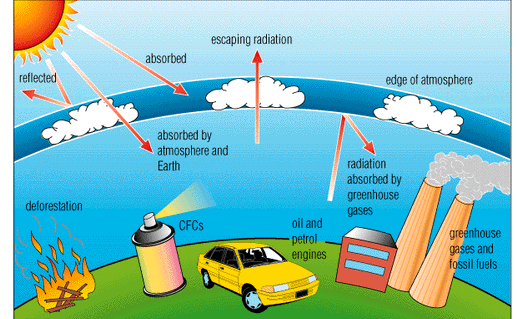
Sources of global warming

History of Global Warming

The concept of global warming is not new; scientists have been studying the Earth’s climate for centuries, and they have long recognized the potential for human activity to influence the climate. However, it was not until the 20th century that global warming became a major topic of scientific inquiry.

One of the first scientists to study global warming in depth was Swedish chemist Svante Arrhenius, who in 1896 published a paper outlining the potential for human activity to cause global warming. Arrhenius’s work was based on the idea that carbon dioxide, a greenhouse gas, could trap heat in the atmosphere and cause the Earth’s temperature to rise.

Since Arrhenius’s time, scientists have continued to study the Earth’s climate and the potential for human activity to influence it. In recent decades, however, the speed of research has accelerated, as the scientific community has become increasingly concerned about the potential consequences of global warming.

Causes of Global Warming

There is broad scientific consensus that global warming is primarily caused by human activities, particularly the burning of fossil fuels such as coal, oil, and gas. When these fuels are burned, they release large amounts of carbon dioxide and other greenhouse gases into the atmosphere. These gases trap heat from the sun, causing the Earth’s temperature to rise.

In addition to fossil fuel burning, other human activities can also contribute to global warming. For example, deforestation can reduce the Earth’s ability to absorb carbon dioxide, while agriculture and land use changes can release other greenhouse gases into the atmosphere.

Natural factors such as volcanic eruptions and changes in solar radiation can also influence the Earth’s climate, but these factors are believed to play a smaller role in global warming than human activities.

Effects of Global Warming

The effects of global warming are already being felt around the world, and they are expected to become more severe in the coming decades. One of the most visible effects of global warming is the melting of glaciers and ice caps, which is causing sea levels to rise. This in turn is increasing the risk of flooding in coastal areas and threatening the homes and livelihoods of millions of people.

Global warming is also causing changes in weather patterns, with more frequent and severe heat waves, droughts, and storms. These changes are affecting agriculture, water supplies, and ecosystems around the world.

In addition to these direct effects, global warming is also expected to have indirect effects on human health, through increased exposure to air pollution, waterborne diseases, and other health risks.

Solution to Global Warming

Given the severity of the potential consequences of global warming, action must be taken to reduce greenhouse gas emissions and mitigate the effects of climate change. There are many potential solutions to this problem, ranging from individual actions to government policies.

Individual actions can include reducing energy consumption at home, driving less, and eating a plant-based diet. These actions can help to reduce carbon emissions and raise awareness about the issue of global warming.

At the government level, policies such as carbon taxes, cap-and-trade systems, and renewable energy incentives can help to incentivize the reduction of greenhouse gas emissions. International agreements such as the Paris Agreement, which aims to limit global warming to well below 2 degrees Celsius above pre-industrial levels, are also important tools for addressing the issue.

Exploring the Environmental impacts of Darvaza Gas Crater Fire

The fire crater in Darvaza, Turkmenistan, commonly referred to the “Door to Hell,” has been burning for over 50 years and has a significant impact on the surrounding environment.

Darvaza Gas Crater Fire in Turkmenistan

Located in the middle of the Karakum Desert, the fire crater was formed in 1971 when a drilling rig accidentally punctured a large underground deposit of natural gas. In an attempt to prevent the release of toxic gases, Soviet geologists set the gas on fire, hoping it would burn out in a few days. However, the fire has continued to burn to this day.

The intense heat and fumes from the fire have a damaging effect on the local flora and fauna. The area directly surrounding the crater has been largely deforested and the vegetation that once flourished in the region has been replaced by a barren, lifeless landscape. The heat from the fire has also made it difficult for wildlife to survive in the vicinity.

In addition to the direct environmental effects, the fire crater also has an impact on the air quality in the surrounding area. The fumes from the burning gas contain a number of harmful pollutants, including carbon monoxide and methane, which can have negative effects on human health. The emissions from the fire have also contributed to air pollution in the region, which has led to a decrease in air quality.

The impact of the fire crater on the local water supply has also been a concern. The release of toxic gases and chemicals into the air can contaminate nearby water sources, potentially affecting the health of humans, plants and animals as well that rely on the water.

Despite the negative effects of the fire crater, it has also some positive impacts on the local economy. The attraction has brought tourists to the region, providing a source of income for local communities. In recent years, there have been efforts to preserve the site and make it a more sustainable tourist destination, such as building facilities for visitors and regulating the number of people allowed in the area at any given time.

In conclusion, the fire crater in Darvaza, Turkmenistan has a profound impact on the surrounding environment. The intense heat and fumes from the burning gas have damaged the local flora and fauna and affected air and water quality. However, the site has also provided economic benefits for the local community through tourism. It is important that efforts are made to mitigate the negative effects of the fire and preserve the site for future generations.

Best tips for self-study

Self-study matters during an educational career. Most things are learnt through self-study. Let’s know about easy methods of self-study

SQ3R

It’s an easy method to understand any topic during self-study. S stands for survey, Q stands for questions, and 3R stands for reading, recall and review.

You have to read the topic and collect information, after that you have to ask questions yourself about that topic and the collected information. Afterwards, read the topic and find the answers to your questions. Recall the topic and then review your answers.

This is the best way to self-study. With this method, you will get answers to all your questions and will understand the topic easily.

Book exchange

This is a usual and common way to self-study. Everyone can follow this method and it’s simple to understand. This method is really helpful and saves you from boredom.

Read the topic and understand the theme of the topic. Clear your doubts and read the topic again. First, try to understand the meanings of difficult words and then write the topic in your own words.

Match your words with the original passage. If you don’t understand then repeat the same process.

If you get bored during the study of one subject so take a break and read your favourite subject and repeat the same process. You can study and save time as well.

Healthy relationship tips for couples

A healthy relationship is the key to a happy and peaceful life. To maintain a good relationship, some tips can be adopted that will help you.

1.Give time to each other

The first and most useful tip for a healthy relationship is that you have to spend enough time with your partner. By doing this, you can better understand the feelings and thoughts of each other. Better understanding and spending much time with your partner are keys to a healthy relationship.

Lack of time will lead to some doubts and mistakes. This may cause anyone to stay away from relationships.

2. Non-verbal communication

The gesture is the non-verbal medium of communication. Catching even a small gesture and answering positively is another tip for a healthy relationship.

Most people share their feelings through gestures. You have to understand every gesture and respond to it directly. The exchange of gestures makes your relationship interesting.

3. Believe in your relationship

The best tip of a healthy relationship is belief. You have to believe in your relationship as well as your partner. Never fall in doubt about your relationship and partner. This will make you far away from your partner. Believing in your partner can make your bond strong.

4. Love each other in a unique way

Love is a vital element in a healthy relationship. Uniquely love your partner. Expressing your love for how much you love him, accepting his bits and acts, playing games with him, talking about his or her favorite things, going outside, and fulfilling desire. This will make your relationship healthy.

5. Never tell a lie to your partner

A healthy relationship needs truth, trust, and loyalty. A relationship with a true and loyal partner will always be strong. Never tell a lie to your partner about any matter.

By doing so, your partner has no more trust in you. You lose your partner and your relationship also. If you are loyal to your relationship, your partner deeply falls in love and tries to strengthen the bond and relationship.

Your loyalty shows your sincerity in a relationship and how much you care about the partner and relationship.

6. Support your partner

Always support your partner. Supporting your partner in any aspect of life can make your relationship good and powerful.

Always stand with your partner. Don’t leave your partner in a tough time and never let your partner feel alone even in your existence.

7. Be patient and tolerant

Sometimes, in a relationship, you have to face some challenges and serious problems, but you have to stay patient and tolerant. Handle the problems without being emotional.

Through this act, you save your relationship from degrading and protect your relationship well. You have to face attitude issues but keep calm and understand your partner with patience and tolerance.

8. Share secrets with each other

Sharing secrets with your partner can make you trustworthy and honest in your relationship. This will make your relationship stronger. This makes room in the heart of your partner.

Never hide anything from your partner and tell him everything about yourself. 

9. Never pay fake attention

The most important thing for a healthy relationship is attention. Attention has a direct link with the strength of the bond. Always pay real attention to your partner and adopt a positive attitude.

Don’t pay fake attention to your partner; otherwise, this act will end your relationship, and you will lose your partner.

Depression, the killer, and worse enemy of your happiness and life

With time new problems and issues are created. This may affect your daily activities and life routine. Physical and mental health may be affected by this sort of problem. Depression is one of the issues that is caused due to some reason. It will cause a lack of physical and mental health as well.

Depression

Depression is a mood-related disorder. It is the feelings of sadness, anger, and loss which leads to mood changes. In this condition, a lot of changes occur in human physical activities and mental health. It hit our mental health and causes an unwanted change in life. Depression is a common disorder but it is different for gender. 

Depression in females

   Mostly, females are more involved in depression than males. Their mood and behavior change easily. As we compare married women to virgins, so we can easily know that married women are involved more in depression. The reason is the responsibilities and relations with the family. Most women are depressed due to the behavior of their family and personal life. Good behavior save women from depression and mental disorders. 

Symptoms

Women experience not a single symptom. A depressed woman may be irritated, hopeless, anxious, and sleepy. It also brought changes in behavior and cognitive abilities such as losing interest in activities, hate gathering and talking, or thinking more slowly. Physically, women face greater fatigue, weight change, appetite changes, headaches, or increased cramps.

Depression in males

The risk of depression in males is less. Males are difficultly depressed. The reason is that they involve in many works and spent more time with their work and profession. Males pay more time and energy exploring the world through their professions, hobbies, and activities. Males are depressed due to their career, any loss in their life, job, and family issues.

Symptoms

 Male also suffer a lot of symptoms. Mental symptoms are aggressiveness, irritability, insomnia, and incapability to focus. It brought physical changes as well like fatigue, digestive disorder, lack of sexual interest, using pills, and involving in high-risk activities. This leads males to lose their energy and interest in professions, routine activities, and hobbies.

Depression in children

Children may also be depressed. They experience various symptoms. These include rapid shifts in mood, crying, intense sadness, difficulty sleeping, change in sleeping time, difficulty concentrating, and self-harm. Loss of energy, digestive problems, change in appetite, and loss or gain in weight is the physical symptoms of depression in children.

Factors causing depression

The above-explained reasons are individual, which is not the same for everyone. Some other factors also push you into depression. These are brain chemistry, hormone level, family history, childhood trauma, brain structure, medical condition, substance use, and pain. These are some solid and basic reasons which grab you towards depression. 

Risk factors

Here are also some risk factors for depression. These are gender, genetics, socioeconomic status, certain medication, vitamin D deficiency, gender identity, substance misuse, and medical illnesses. People facing these factors have a greater risk of depression than others.

Treatment

Treatment of depression is necessary because this causes critical conditions which may lead to suicide or self-harm. Its treatment is not too difficult but just needs some time. Depression can be treated in two ways. One is medication and the other is counseling and therapy. Medication is an easy method but it has also some side effects. Counseling is an easy process but it is lengthy and difficult to control and catch the thoughts of a depressed person.

It is necessary to take proper exercise, gather, play, take part in social activities, and be extroverted. This saves from depression and less the risk. It is mandatory to get proper treatment and steps to get out of the depression.